
Meet VarSee Lung.
VarSee Lung measures blood biomarkers and reads their combined pattern with specialist machine learning. It is our first disease-specific product.
Available for research use onlyAsk about availability
VarSee Lung.
Explained in three minutes.
Why lung cancer is so often found late, and how VarSee Lung reads a panel of blood proteins with machine learning.
Video · 2 min 52 s · with sound · plays in Google Drive’s player. VarSee Lung is available for research use only and is not for diagnostic use.
Most lung cancer in India
is found late.
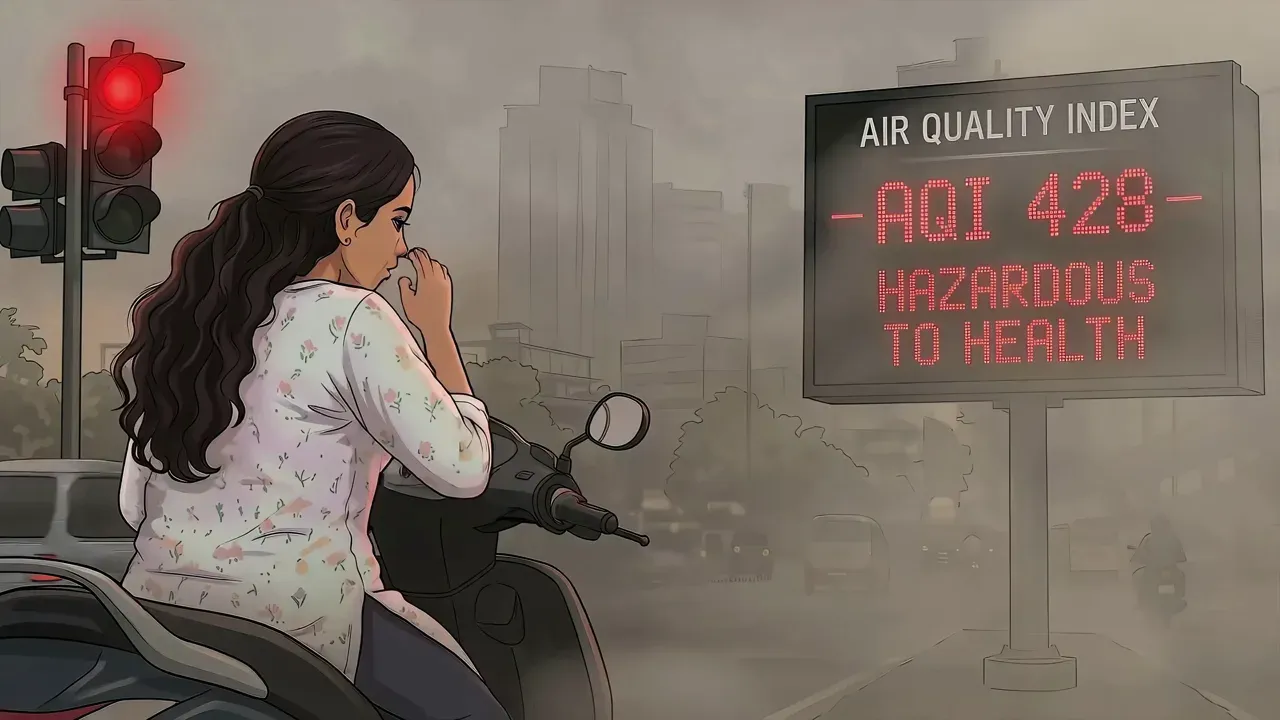
Lung cancer is the most common cancer among men in India and, in the latest IARC estimates (opens in a new tab), the leading cause of cancer death. Most people learn they have it at an advanced stage, often after months of treatment for something else. Found earlier, many more people are alive five years on.
- 1.46 million
new cancer cases estimated in India in 2022. Lung cancer is the leading site among men.
ICMR-NCRP, 2022 (opens in a new tab) - 8 in 10
lung cancers had already spread when diagnosed, nearly half to distant organs, across 22,645 patients in 58 hospital registries.
ICMR-NCRP hospital registries, 2022 (opens in a new tab) - 40%
of patients in a North Indian series were on tuberculosis treatment when they reached hospital. Their diagnosis was delayed by 3.2 months on average.
Agrawal et al., 2013 (opens in a new tab) - 48%
of 3,414 people with advanced lung cancer at Tata Memorial Centre were non-smokers.
Tata Memorial Centre, 2025 (opens in a new tab)
Stage at diagnosis changes the odds.
Localised: 65.5% were alive five years after diagnosis. Found while the cancer is still confined to the lung. 24% of US lung cancers are found at this stage.
The earlier the stage, the longer people live. That gap is why we start with lung.
Read the data as a table
| Stage at diagnosis | Five-year relative survival | Share of US cases diagnosed |
|---|---|---|
| Localised | 65.5% | 24% |
| Regional | 38.2% | 21% |
| Distant | 10.5% | 51% |
Published figures describe the populations studied. They explain why earlier detection matters and are not results of VarSee.
- Sathishkumar K, Chaturvedi M, Das P, Stephen S, Mathur P. Cancer incidence estimates for 2022 & projection for 2025: Result from National Cancer Registry Programme, India. Indian J Med Res. 2022;156(4&5):598–607. (opens in a new tab)
- Nath A, Sathishkumar K, Das P, Sudarshan KL, Mathur P. A clinicoepidemiological profile of lung cancers in India – Results from the National Cancer Registry Programme. Indian J Med Res. 2022;155(2):264–272. (opens in a new tab)
- Agrawal A, Agarwal PK, Tandon R, Singh S, Singh L, Sharma S. Pulmonary tuberculosis as a confounder for bronchogenic carcinoma due to delayed and misdiagnosis. Indian J Community Health. 2013;25(4):438–444. (opens in a new tab)
- Trikha M, Noronha V, Shah M, Patil V, Menon N, Prabhash K, et al. Clinical characteristics and first-line palliative treatment patterns in 3,414 patients with advanced lung cancer in India. ecancermedicalscience. 2025;19:1867. (opens in a new tab)
- International Agency for Research on Cancer. Global Cancer Observatory: Cancer Today, GLOBOCAN 2024. India fact sheet. (opens in a new tab)
- National Cancer Institute. Cancer Stat Facts: Lung and Bronchus Cancer. SEER 21, five-year relative survival 2016–2022. (opens in a new tab)
Early enough
to operate.
Non-small-cell lung cancer, the most common type, can often be removed with surgery when it is found at stage I or II; guidelines name surgery the treatment of choice. Found later, surgery is rarely an option. Large screening trials show how much changes when cancer is found earlier.
“For stage I–II NSCLC patients and no medical contraindications to surgery, surgical resection remains the treatment of choice.”
SEOM 2018 guideline
Low-dose CT: 50.0% of lung cancers were found at stage I (520 of 1,040) and 21.7% at stage IV, after it had spread.
Read the data as a table
| Screening arm | Cancers | Stage I | Stages II–III and other | Stage IV |
|---|---|---|---|---|
| Low-dose CT | 1,040 | 50.0% (520) | 28.3% | 21.7% (226) |
| Chest X-ray | 929 | 31.1% (289) | 32.8% | 36.1% (335) |
Published trial results, not VarSee results
- 92.5%
of stage I cancers in the CT arm were treated with surgery, alone or with other treatment.Source 2
NLST, 53,454 people at high risk, United States - 20%
fewer deaths from lung cancer with low-dose CT screening than with chest X-ray.Source 2
NLST, relative reduction 20.0% - 24%
fewer deaths from lung cancer among men after ten years than without screening.Source 3
NELSON, rate ratio 0.76 at ten years, Netherlands and Belgium
Few patients reach surgery, and most are diagnosed late. That is the gap earlier detection has to close.
- 3%
of 1,013 patients with treatment records at AIIMS New Delhi had surgery. 95% of non-small-cell lung cancers were diagnosed at stage III or IV.Source 4
1,862 patients, 2008–2018 - 6%
of patients at Tata Memorial Hospital, Mumbai, had surgery. The largest group (43%) was at stage III on arrival.Source 5
489 patients, 2008–2009
These results come from CT screening trials and hospital records, not from VarSee. They show why finding lung cancer earlier matters. A blood test would need its own evidence.
- Majem M, Juan O, Insa A, et al. SEOM clinical guidelines for the treatment of non-small cell lung cancer (2018). Clin Transl Oncol. 2019;21(1):3–17. (opens in a new tab)
- National Lung Screening Trial Research Team; Aberle DR, Adams AM, Berg CD, et al. Reduced lung-cancer mortality with low-dose computed tomographic screening. N Engl J Med. 2011;365(5):395–409. (opens in a new tab)
- de Koning HJ, van der Aalst CM, de Jong PA, et al. Reduced lung-cancer mortality with volume CT screening in a randomized trial. N Engl J Med. 2020;382(6):503–513. (opens in a new tab)
- Mohan A, Garg A, Gupta A, et al. Clinical profile of lung cancer in North India: a 10-year analysis of 1862 patients from a tertiary care center. Lung India. 2020;37(3):190–197. (opens in a new tab)
- Noronha V, Dikshit R, Raut N, et al. Epidemiology of lung cancer in India: focus on the differences between non-smokers and smokers: a single-centre experience. Indian J Cancer. 2012;49(1):74–81. (opens in a new tab)
What is VarSee Lung?
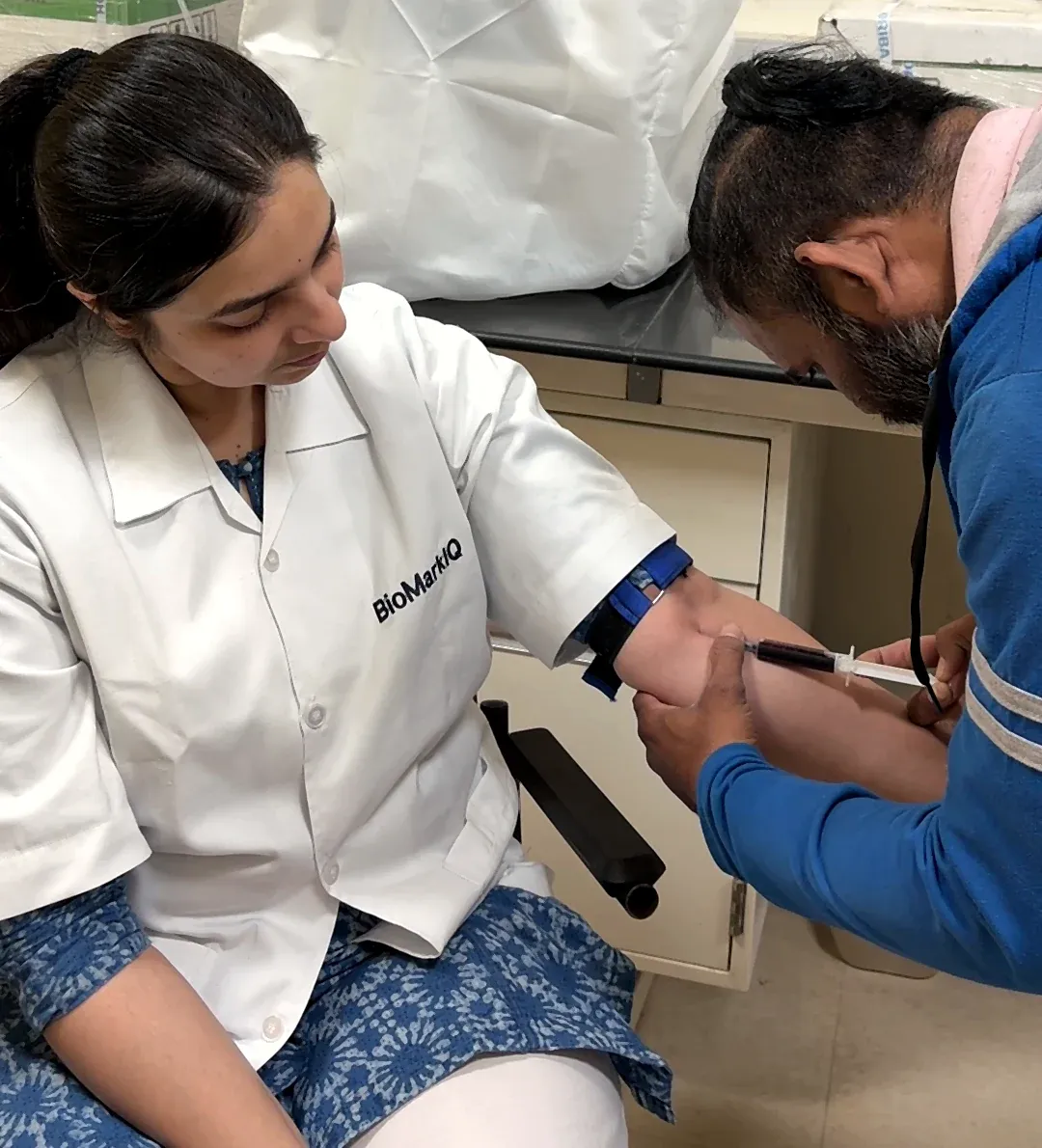
VarSee Lung combines a panel of blood biomarkers with a specialist model for lung-cancer research. The proteins are measured using automated immunoassays.
The model reads the measurements together with clinical context, rather than treating each marker as a separate answer.
Why measure more
than one biomarker?
A marker can be useful without telling the whole story. Complementary biomarkers offer different views of the same disease.
The illustration shows how a second measurement can separate overlapping patterns.
Explore the scienceFind people with the condition.
Of the people with the condition, how many does the test find? Everyone past the threshold is flagged; squares short of it are missed.
Identify people without it.
Of the people without the condition, how many does the test correctly clear? Circles past the threshold become false alarms.
Add a second signal.
A second measurement can pull the groups apart, so fewer are missed and fewer are flagged by mistake. Whether a real panel does this is what validation has to show.
Build for sensitivity.
Build for specificity.
Finding a cancer signal and avoiding a false alarm are both central to early-detection research. We study these questions together, with attention to disease stage and the population being tested.
That is why we are building from the bottom up: a focused panel, a disease-specific model, and an evaluation designed for the question.
Review the evidenceA shared question.
Across centres.
Our collaborations with Tata Memorial Centre institutions for the VarSee Lung Diagnostic Accuracy Study.
 Tata Memorial Centre(opens in a new tab)
Mumbai
Varanasi
Sangrur
Study ethics clearance announced .
Read the study announcement (LinkedIn, opens in a new tab)Your questions about access.
Can I take VarSee Lung as a routine cancer screening test?
VarSee Lung is currently available for research use only, not for diagnostic use or routine cancer screening. Contact BioMarkIQ to ask about research-use access in your location. Your clinician can advise you about established screening options.
Where can I access VarSee Lung?
Email info@biomarkiq.com with your city, country, and whether you are asking for yourself, a clinic, or a laboratory. The team can discuss current research-use access options and the next steps.
How much does VarSee Lung cost?
Contact BioMarkIQ for current research-use pricing and access arrangements in your location.
Does VarSee Lung test for every cancer?
No. VarSee Lung focuses on lung-cancer research. BioMarkIQ is developing further disease programmes toward multi-cancer early detection; VarSee Lung is not an all-cancer test.
Interested in
VarSee Lung?
Ask about research-use access in your location. Researchers and laboratories can also contact us about study collaborations and pilots.
Ask about the testResearch groups
Connect a disease question with biomarker and model development.
Laboratories
Discuss measurements, research workflows, and a potential pilot.
Commercial partners
Combine your capabilities with our panels and models.