
Ten years of lung cancer screening and learnings
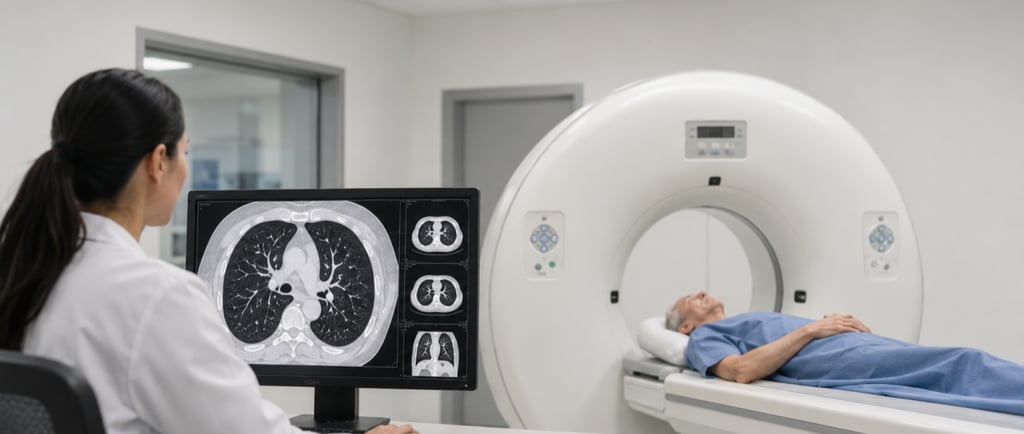
Is there a way to detect lung cancer early?
Introduction
Lung cancer, particularly, is notorious for being diagnosed at an advanced stage because of the overlap of early lung cancer symptoms with cough, tuberculosis, pneumonia, etc. By the time the patient gets diagnosed, the treatment options become more expensive, exceedingly limited, and the prognosis becomes grim.
Is there a way to detect lung cancer early? YES!
How can we do it? By implementing robust lung cancer screening programs.
What does lung cancer screening mean?
It is a process by which populations at a high risk of lung cancer are identified, tested, followed up, and treated (if necessary) in a structured manner. Globally, cancer screening programs have been successful in diagnosing cancer early, thereby improving patient outcomes and reducing socioeconomic burden on the families and healthcare systems.
The objective of this blog
The purpose of this blog is to review existing lung cancer screening programs (not trials) worldwide and to understand how we can develop a successful lung cancer screening program in India.
The US story so far
Recently, the US completed 10 years of the USPTF (US Preventive Services Task Force) lung cancer screening program, and its findings offer an excellent learning opportunity for policymakers.
What is the USPTF screening criteria?
Before we delve deeper, let’s understand the eligibility criteria for lung cancer screening in the US. According to USPTF1
Adults aged 50-80 with a smoking history of 20+ pack-years (currently smoking or quit within the last 15 years) are eligible for LC screening
Adults aged 50-80 whose health status limits life expectancy or curative surgery.
It is important to note that in 2013, the screening eligibility criteria were 55-80 with a smoking history of 30+ pack years.
What does the 10-year lung cancer screening data look like?
Only 1 in every 4 eligible people gets annual LC screening
There is a huge difference between uptake- state-wise, where Massachusetts shows about 38.36 percent uptake, whereas South Dakota reports about 13.43 percent uptake
The percentage of uninsured individuals getting annual LC screenings was as low as 6%
On the contrary, the veterans and ex-military population covered by insurance showed an uptake of 39%
After the USPTF criteria were updated, the uptake in the newly eligible people (50-55 years) was considerably lower- 11.32%.
Key learnings from the US story
Uptake is slow - 6% increase from 2022 to 2024.
Uptake depends on financial coverage provided by healthcare providers, and insurance or the country’s healthcare policy coverage improves uptake.
Within the same country, uptake varies widely, highlighting the importance of nationwide policies rather than state-level implementation.
Implementation is easier with structured pathways, such as military-related insurance.
The UK story
Since its implementation in 2019, the program’s name was updated from Lung Health Check (LHC) to The Lung Cancer Screening Program. The name change made the objective clear and direct, rather than the ambiguity of the “LHC”.
Key differences from the US program
It is led by the National Health Service (NHS), meaning LDCT-based lung cancer screening is financially covered by the NHS.
Targets socioeconomically challenged areas to bridge gaps, as awareness and uptake are generally lower in these areas.
Phone-based outreach to >55 years old ever smokers (those who have smoked in their lives) and follow up to improve reach and uptake of the program
Use multivariate risk prediction models and screen only those who meet the risk threshold with LDCT, thus reducing the burden on the healthcare system.
Key findings from the UK Lung Cancer Screening Program
1/3 of the target population was invited to participate in the study; nationwide implementation highlighted the importance of a nationwide population database and the use of project management tools.
The observed cancer conversion rate among 74,202 participants was 1.2%, 1.4%, and 1.5% at baseline, 3 months, and 12 months scan, respectively.
The biggest win is that the early stage detection of cancer has increased, specifically in the socioeconomically disadvantaged class, from the lowest to the highest quintile.
Protocols for non-incidental findings arising from LDCT-based screening have now been standardized and implemented, helping clinicians manage such cases uniformly across the country.
Lessons from the East
Taiwan
In 2022, Taiwan launched a lung cancer screening program for smokers and non-smokers. While the criteria for smokers remain fairly consistent with USPTF guidelines, the criteria for screening non-smokers are much more nuanced.
For non-smokers, the population with first-degree relatives suffering from lung cancer, including women aged between 45 and 74 and men aged between 50 and 74, was considered eligible for screening. This decision is a historic and important step, considering the increasing incidence of lung cancer in Asian non-smoking women.
South Korea
Another Asian country to have successfully implemented a nationwide screening program is South Korea. It launched the National Lung Cancer Screening Program (NLCSP) in 2019, and since then, it has become part of the nation’s cancer screening pipeline and fits perfectly within the structured framework.
The national, centralized population databases help identify and contact at-risk individuals, while the screening process is primarily covered by national insurance.
The results of the 7-year study have not been published to date, so one cannot comment on the overall success of early lung cancer diagnosis.
Learnings and the way ahead
Currently, LDCT is the only screening method used in screening programs for LC. While it has improved diagnostic efficiency, a positive finding still places a psychological, social, and financial burden on families and the system.
About 1-2% of the screened population is lung cancer positive, and early-stage detection rates have been reported up to 85%.2-4
Insurance coverage, whether through central policies or private healthcare providers, plays a crucial role in uptake.
Personal outreach can only be successful if population registries/databases are in place.
Criteria for targeting non-smoking individuals at risk of lung cancer need to be standardized.
Concluding remarks
Lung cancer screening can help detect cancer earlier, but its impact depends on whether the right people are reached, screened, and followed up in time.
Global programs show that funding, outreach, population databases, and clear follow-up pathways are just as important as the LDCT scan itself.
For countries planning screening programs, the priority should be to build systems that are accessible, fair, and adapted to local lung cancer risk patterns.
References:
1. Lung Cancer: Screening. https://www.uspreventiveservicestaskforce.org/uspstf/recommendation/lung-cancer-screening
2. Burus T, McAfee CR, Knight JR, Mullett TW, Hull PC. Lung Cancer Screening Prevalence and Changes in 2024. JAMA Intern Med. Published online April 27, 2026:e260493. doi:10.1001/jamainternmed.2026.0493
3. Lee RW, Nair A, Balata H, et al. Implementation of the NHS England Lung Cancer Screening Programme over 5 years. Nat Med. Published online March 23, 2026. doi:10.1038/s41591-026-04292-y
4. Taiwan Launches National Lung Cancer Early Detection Program Detects 85 Percent of Lung Cancer Cases at Early Phase. https://www.iaslc.org/iaslc-news/press-release/taiwan-launches-national-lung-cancer-early-detection-program-detects-85?utm_source=chatgpt.com
5. Implementing a national screening programme for lung cancer in South Korea. https://www.lungcancerpolicynetwork.com/implementing-a-national-screening-programme-for-lung-cancer-in-south-korea/